
A research desk for fantasy football, not another rankings page.
Live NFL and college stats, factor-based projections that show their work, an engine built to disagree with the crowd, and a simulator that models how football outcomes actually move together. Every number can explain where it came from.
- 15
- modeled factors
- 25k
- simulation paths
- 26
- live news feeds
Four engines, one honest premise
Weekly fantasy scoring has a large irreducible random component. Any product that hides that from you is selling confidence. These tools are built to find a small, persistent edge — and to let you verify it.
Medallion Engine
Fifteen weak signals, ridge-fitted weekly
Standardized within position, weights learned from this season's own results, refit every week, predicting one week ahead. It reports its holdout error instead of hiding it.
Contra Engine
Prices being different from the crowd
Models projected ownership, then divides ceiling equity by it. Leverage, fades, traps, and the expected-duplicate math that tells you whether a lineup can win a large field at all.
Monte Carlo
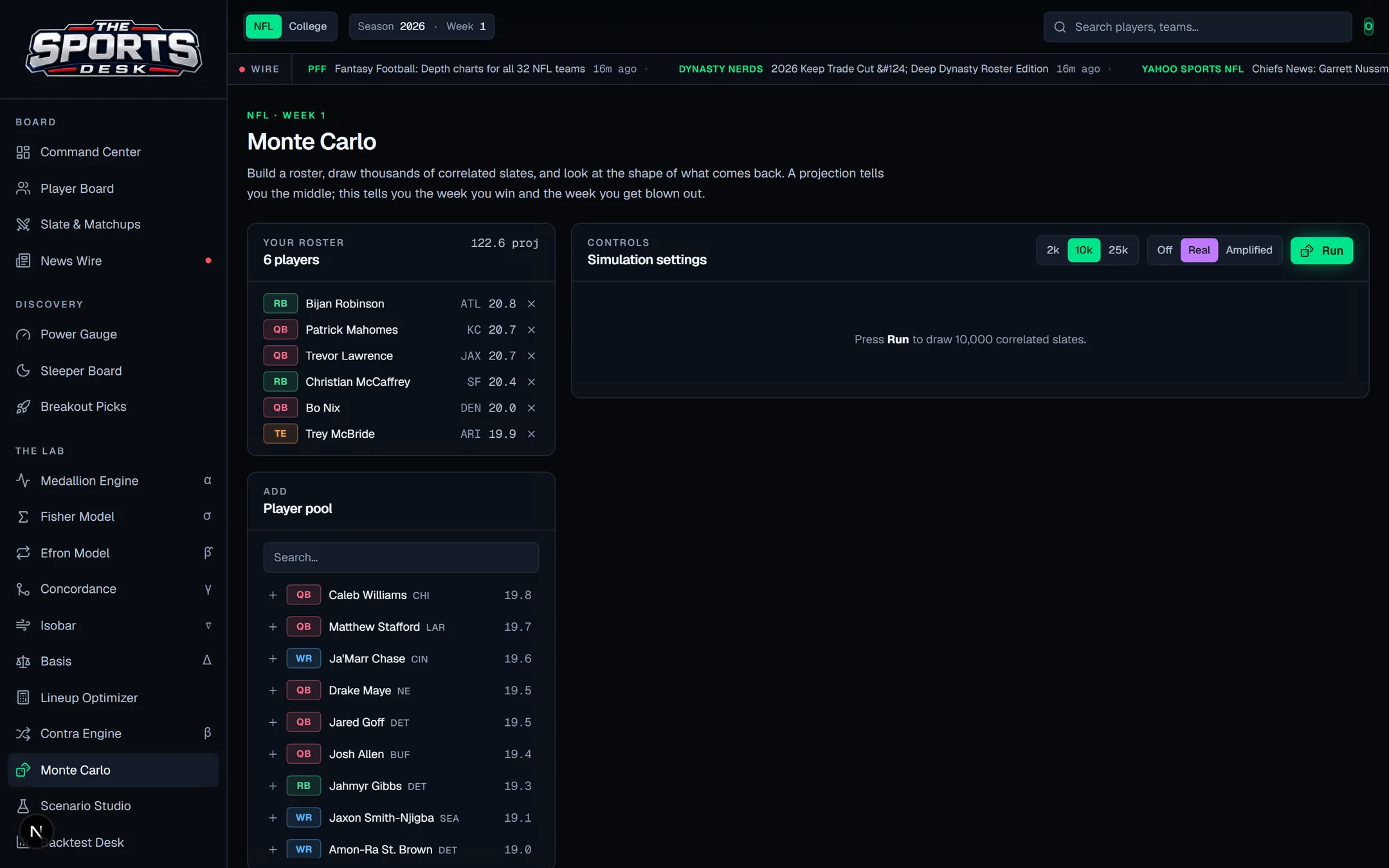
25,000 correlated slates
Real correlation structure — QB-WR stacks at +0.46, split backfields at −0.38 — factored with Cholesky and drawn jointly. Turn correlation off and watch your ceiling collapse.
Concordance
Where two engines that disagree agree
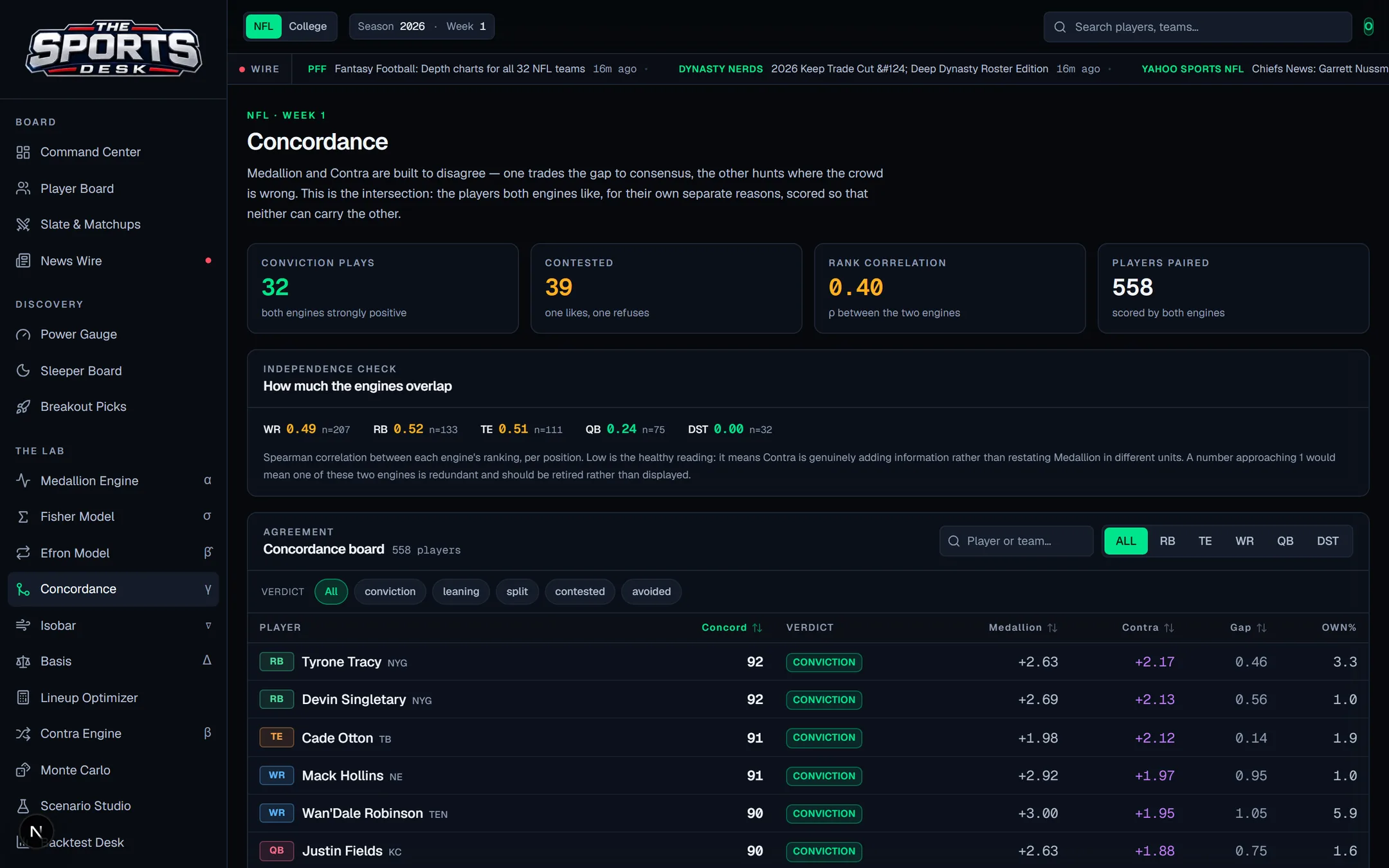
Medallion and Contra are built to answer different questions. This scores the intersection by taking the weaker of the two, so one strong signal cannot carry a weak one — and publishes how far the engines actually overlap.
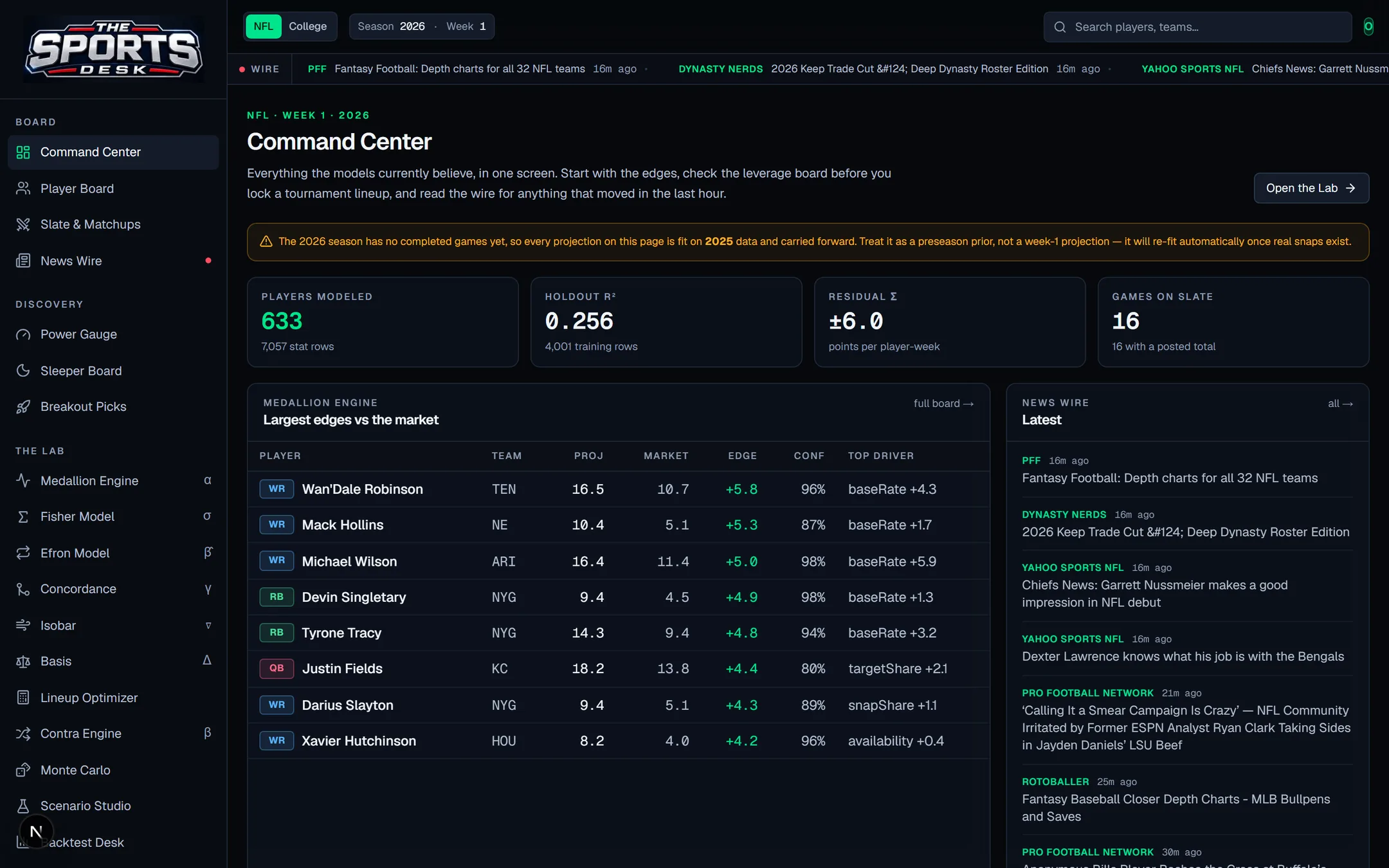
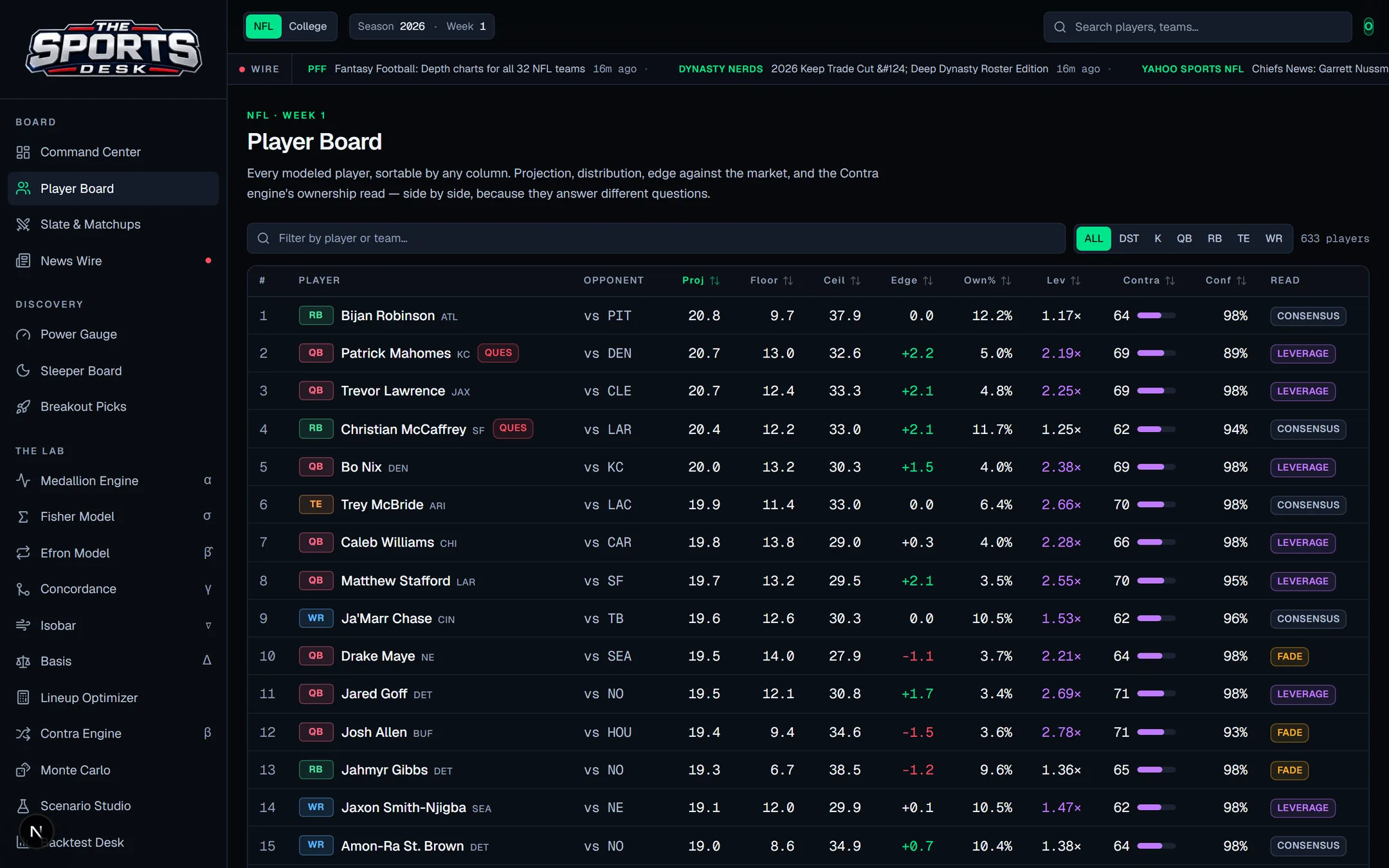
Built like a trading desk, not a blog
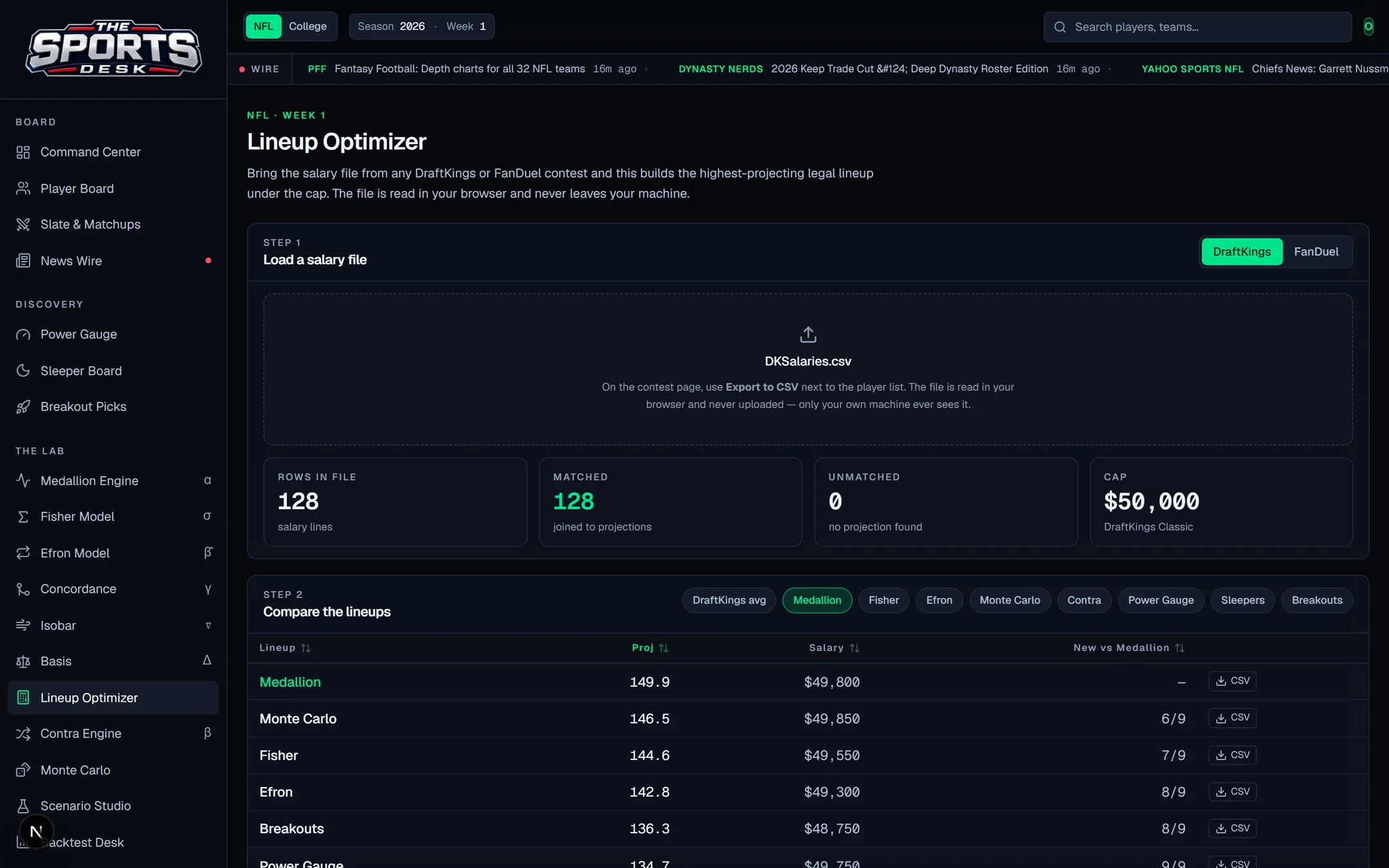
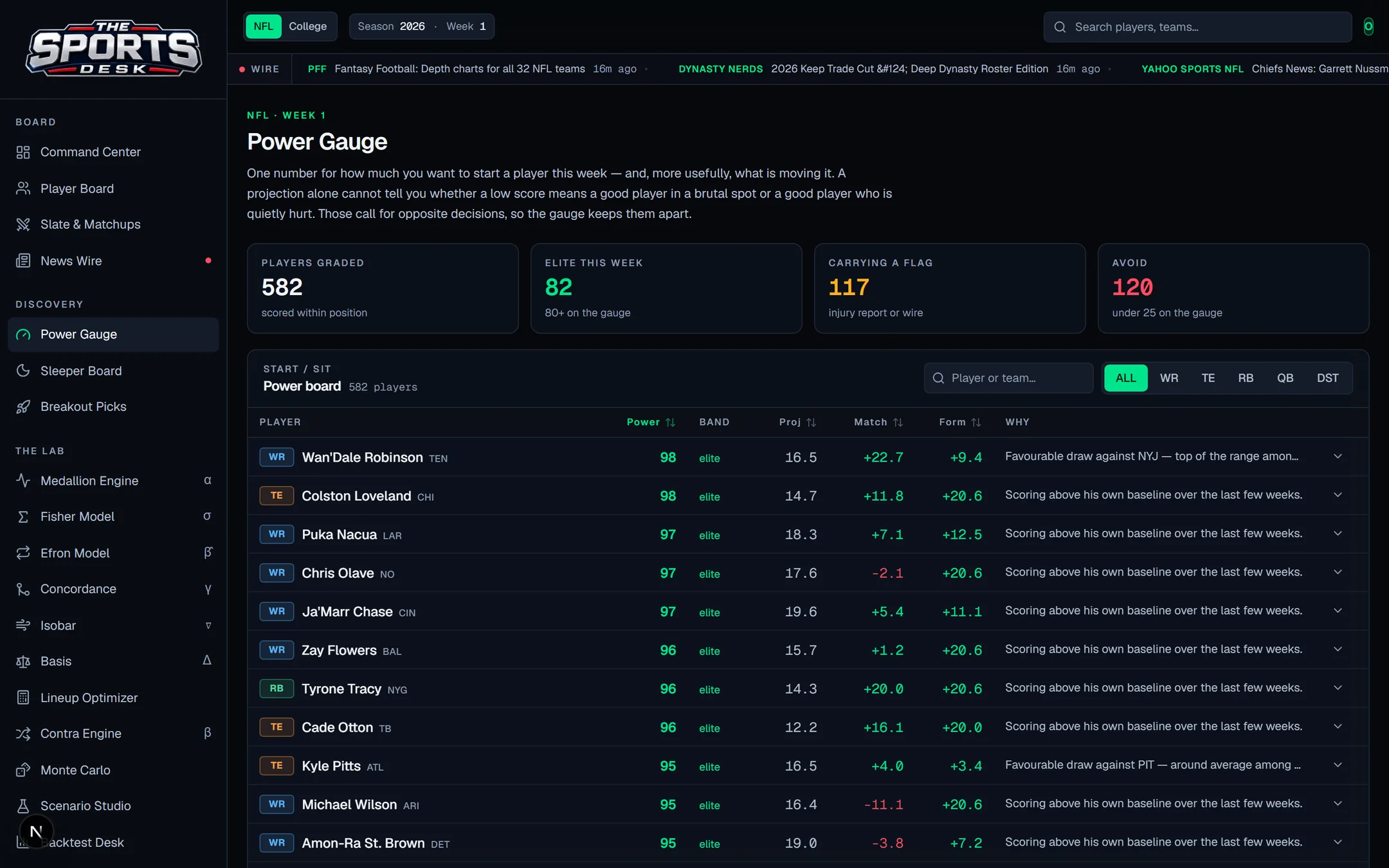
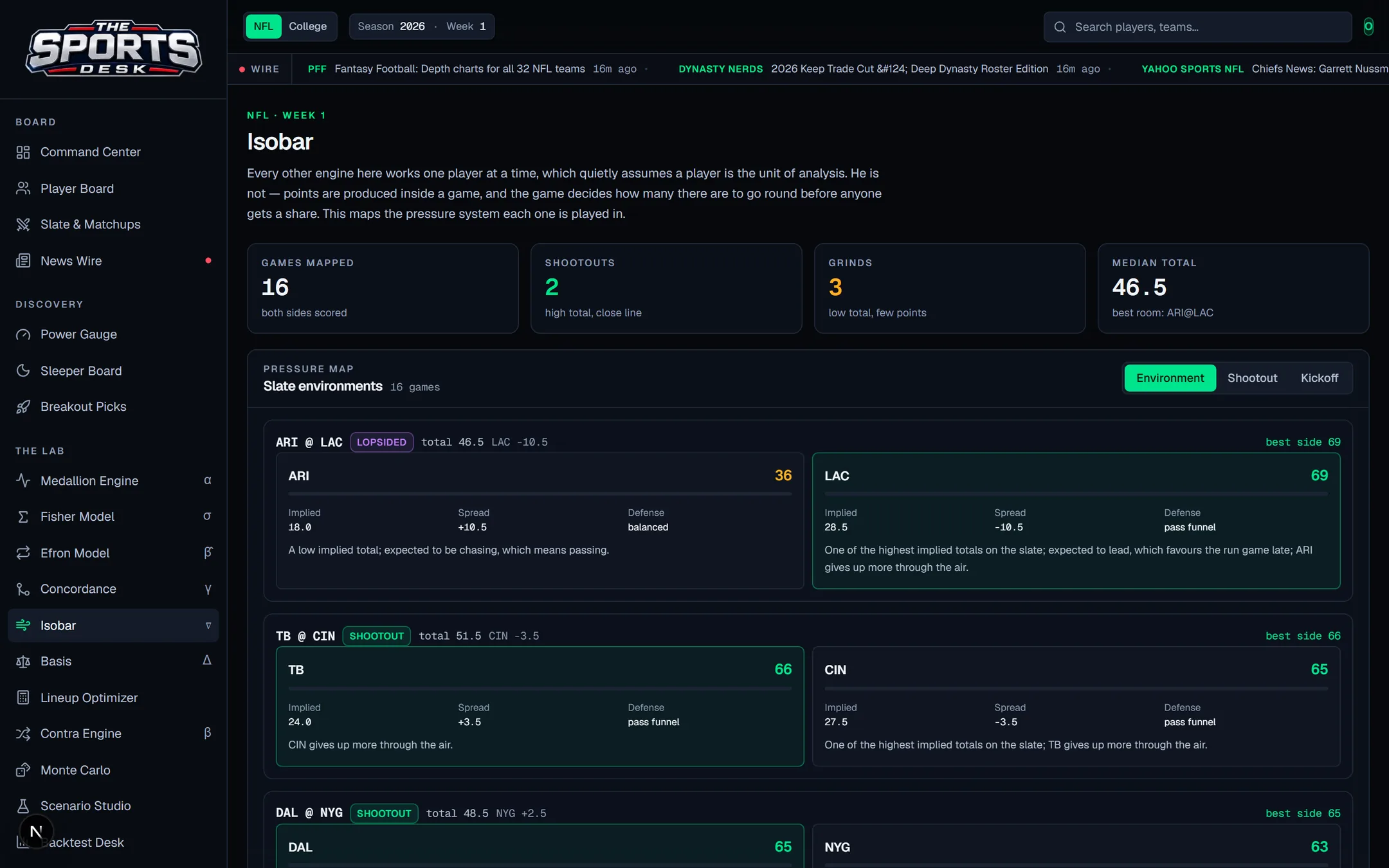
Dense, sortable, and fast. Every surface is designed to be read at a glance on Sunday morning and interrogated in depth on Tuesday night.
The wire, merged and de-duplicated
26 feeds from the sites that actually move fantasy markets — analysis desks separated from transaction wires, headlines tagged with the players they mention, dead sources flagged instead of silently dropped.
Every plan is the same model.
Scout gets the full player board, the whole news wire, the top of the edge board every week and a real simulation. Analyst and Quant add depth and the tools to audit it — never a better model, and never a number Scout is not also shown.